
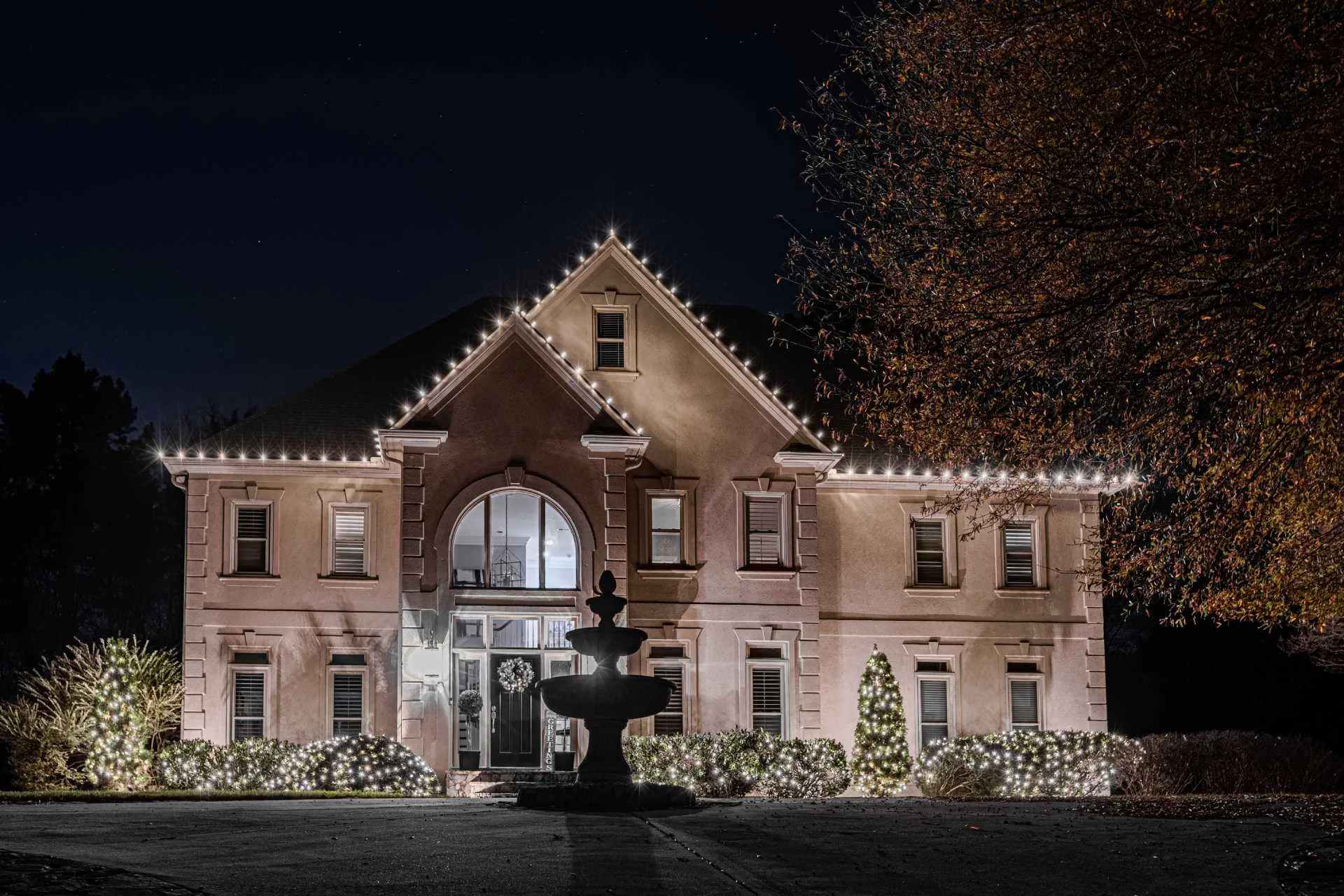
Custom holiday lighting design begins with a practical question: what should people notice first when they approach the property? A front entry, clean roofline, prominent tree, or storefront entrance can become the visual anchor. Once that priority is clear, the design can balance a recognizable holiday atmosphere with the realities of wiring routes, landscaping, and seasonal access.
Build the design around what is actually visible
Daylight photos identify roof edges and attachment surfaces; dusk photos reveal where the display is most likely to be seen. A composition that looks balanced from a walkway can feel crowded from the street, so the primary viewing angles should be chosen before lights are specified.
Contrast is more useful than covering every surface. A restrained roofline can define the building while a lit feature tree introduces depth. The final choice between warm white, cool white, mixed color, and programmed effects should suit the architecture and the owner’s priorities rather than follow a generic template.
- Identify a single primary focal point and one or two supporting features.
- Decide the main viewing direction before selecting display density.
- Confirm permitted mounting surfaces and power access.
Choose components with their installation context in mind
Design plans should note approximate runs, corners, roof pitches, tree canopy changes, and points where landscape crews or pedestrians need clearance. Installers can then assess suitable clips, protected connections, weather exposure, and cable routing for the actual building.
An effective proposal describes what is included rather than relying on a broad label such as “custom package.” A roofline-only concept, a combination of roofline and trees, and a full commercial display are different scopes with different access and maintenance considerations.
- Roofline and fascia transitions
- Entryways, columns, railings, and path edges
- Trees, shrubs, and existing landscape focal points
Set a design hierarchy that fits the budget
If the budget is limited, prioritize the front-facing features with the strongest visual impact. A clear hierarchy helps avoid paying for lighted areas that visitors rarely see. Optional enhancements can be separated into a later phase without forcing a complete redesign.
Ask whether the proposed price includes materials, mounting, removal, service visits, and any agreed storage arrangement. Keep the list of inclusions with the design so that competing proposals can be compared on the same scope.
- Phase 1: the primary building outline
- Phase 2: entry and one landscape feature
- Phase 3: secondary elevations or decorative accents
Prepare information for an accurate design review
Photographs from the street, driveway, and front entry are usually more helpful than a single tightly cropped photo. Include any HOA rules, restricted work hours, gate access, and the preferred display period. Point out known outlet locations without assuming their capacity has been verified.
A property-specific review should distinguish confirmed work from concepts requiring inspection. Installation feasibility and appointment availability depend on access, seasonal demand, and the verified service area.
- Wide and close-up property images
- Preferred palette and priority focal points
- Desired installation and takedown windows
Common Questions
Can a design use only part of a property?
Yes. A selective roofline, entry, or tree-lighting concept may offer a more focused display. Final suitability depends on the site and approved scope.
Is custom lighting design the same as an estimate?
No. A concept clarifies appearance and priorities; an estimate must also account for measurements, materials, access, services, and scheduling.
Next Step: Match the Plan to Your Property
The most useful next step is to share property photos, a target date, access constraints, and the lighting details you want considered. An estimate can then distinguish the proposed work from optional seasonal services, subject to coverage and scheduling confirmation.
Explore the holiday lighting resource center, the service-area information, or request a property-specific quote.